Shopping Cart
0


Written by
Shreesto
For years, most Indian families bought their cooking oil without a second thought. That’s changing fast. In 2026, more and more households are asking a simple, powerful question:do I actually know what’s in my oil? Worries about adulteration, chemical refining, and hidden additives have sparked what many are calling a “return to roots” — a shift back to pure, freshly made oil. And the easiest way to get there is a cold press oil machine you can run in your own kitchen. But is it really worth the investment? Let’s break it down honestly.
Refined oils sold in the market are usually extracted using high heat and chemical solvents. This process strips away much of the oil’s natural nutrients, aroma, and flavour — and in some cases, raises real concerns about purity and adulteration. As awareness around clean eating, heart health, and food transparency grows, families are realising that the oil they cook with every single day deserves more attention.
A home oil machine puts that control firmly back in your hands. You choose the seeds, you see the process, and you get oil that’s as fresh and pure as it gets — with nothing added and nothing hidden.
Cold pressing extracts oil from seeds and nuts at low temperatures, without chemicals. Because there’s no intense heat, the oil keeps more of its natural nutrients, antioxidants, aroma, and taste. That’s the core difference between a bottle of refined oil and a jar of oil you press at home.
Both methods have their place, and a good home machine lets you choose:
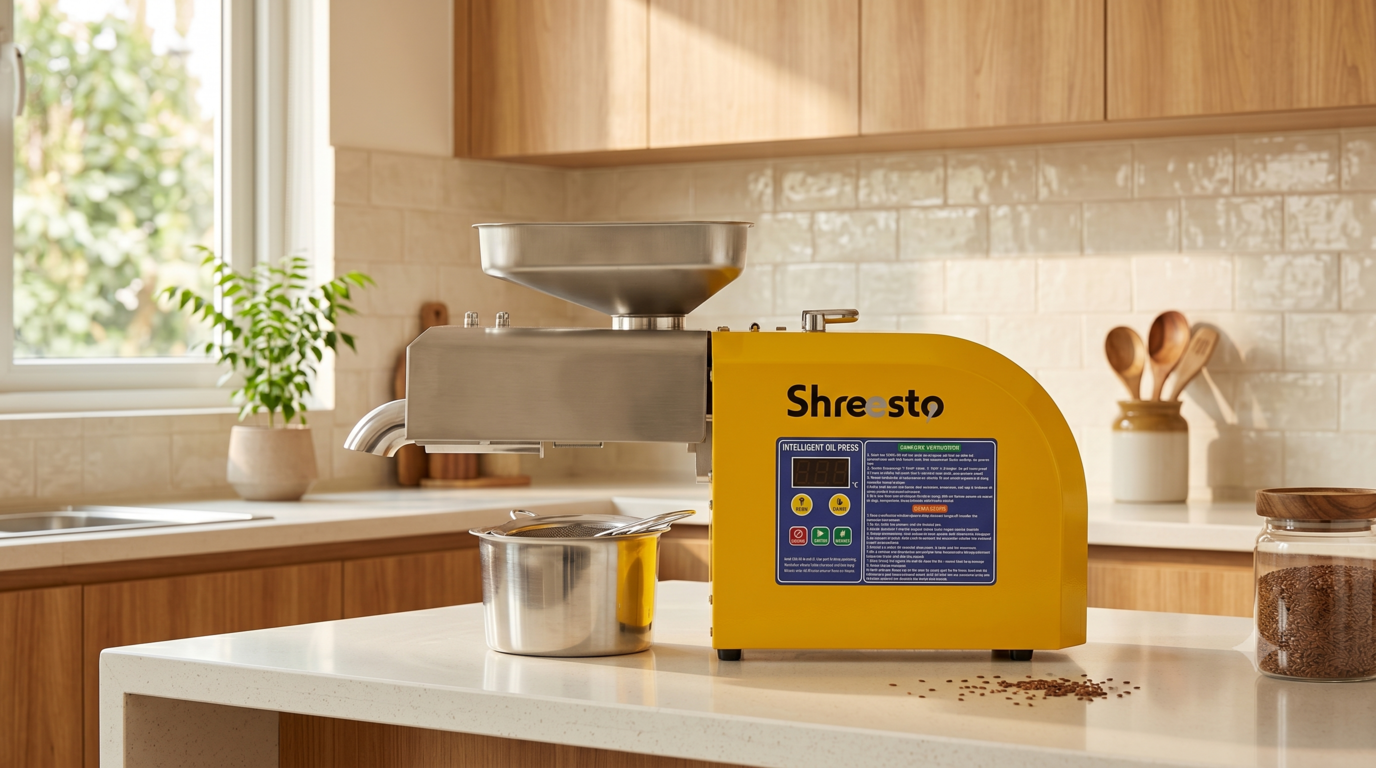
A machine like the Shreesto Smart Oil Press gives you both options with digital temperature control, so you can match the setting to the seed and to what you value most.
Quote block (pull-quote styling): “True purity isn’t something you buy — it’s something you make. When you press your own oil, you know exactly what your family is eating.”
One of the biggest advantages of a home oil machine is variety. A single machine can extract oil from a wide range of ingredients, including:
This flexibility means one machine can replace several store-bought oils — fresher, purer, and made exactly when you need them.
This is the honest question every buyer asks, so let’s be straight about it. A quality home oil machine is an upfront investment, not a cheap gadget. But here’s the way to think about it:
For families that cook daily, value their health, or simply want certainty about what goes into their food, the long-term payoff is real. It’s less about saving money on day one, and more about investing in everyday purity for years.
Not all machines are built the same. Before you buy, check for:
The Shreesto Cold Press Oil Machine is built around exactly these essentials — a 304 food-grade steel chamber, a copper motor, smart temperature control, and an anti-blocking system designed for real Indian kitchens.
In 2026, making your own oil at home isn’t a niche health fad — it’s a practical step toward purity, control, and peace of mind. If you cook regularly and care about what your family consumes, a cold press oil machine pays you back in freshness and trust every single day. The question isn’t really “is it worth it?” — it’s “how much longer do you want to wonder what’s in your oil?”
CTA band (end of blog): Ready to make your own pure oil at home? 👉 Explore the Shreesto Cold Press Oil Machine →
Q: Is homemade cold-pressed oil healthier than refined oil? Cold-pressed oil is extracted at low temperatures without chemicals, so it retains more natural nutrients, antioxidants, and flavour than chemically refined oil.
Q: Which oil can I make with a home oil machine? Most home machines handle groundnut, coconut, mustard, sesame, sunflower, almond, and flaxseed — among others.
Q: Is a home oil machine worth the money? For families who cook daily and value purity, yes — you get fresh, chemical-free oil with full control over quality, and the value adds up over years of use.
Q: What’s the difference between cold press and hot press? Cold press uses low heat to preserve maximum nutrition; hot press uses more heat for higher oil yield. A machine with temperature control lets you choose.

Written by
Shreesto
Written by

